Loading image...


Ethanol Fireplaces
Create an instant talking point
Because bioethanol is clean-burning, EcoSmart Fire models do not need a chimney or a flue, or a utility connection – offering the ultimate in design simplicity and flexibility.
Whether you're creating a custom fireplace feature, renovating an existing fireplace, or looking for an out-of-the-box solution, we have an ethanol fireplace to suit your needs.
Ethanol Ranges


Loading image...


Environmentally-friendly
Fuelled by eco-friendly, readily available renewable energy – e-NRG bioethanol.
No flue, no chimney
Bioethanol is clean burning so you don't need to flue out any harmful emissions or install costly ventilation systems.
Loading image...
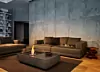

Architectural feature
Bioethanol’s lively dancing flame creates a striking focal point for interior designers.
Loading image...


Design versatility
Easily integrated into bespoke settings – from specially-made cabinetry, media units, walls, floating timber to stone benches and pillars.
The perfect fit
The streamlined design of the products synchronises effortlessly within award-winning architectural projects.
Loading image...

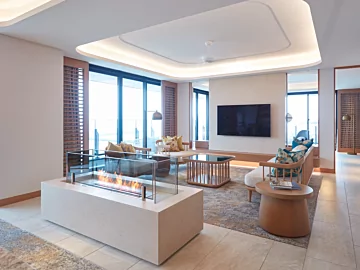 © InterContinental Yokohama Pier 8
 Loading image...
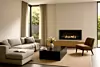

Ventless design
No venting required so ethanol fireplaces fit apartments, renovations, and compact spaces.
Supplemental heating
Add cozy zone warmth with modern fire features to complement your primary heating system.
Powered by e-NRG
Premium liquid fuel engineered for clean, consistent flames with low odour and zero smoke.
Related Collections
Learn More
Ethanol Fireplaces
Bioethanol Fireplaces
Ventless Fireplaces
FAQ's
What is the heat output of a ventless ethanol fireplace?
EcoSmart Fire ventless ethanol fireplaces deliver heat output ranging from approximately 2.5 kW to 6 kW (8,500–20,433 BTU/h), depending on burner size. Heat output correlates directly to burner dimensions: smaller configurations produce around 2.5 kW and heat zones of approximately 20 m² [215 ft²], while the largest burners reach 6 kW and warm spaces up to 60 m² [645 ft²] or larger.
Heat output is adjustable in real time via baffle inserts, so you are not locked at maximum output. You can dial flame intensity up or down to match your comfort needs. This matters for efficiency: over 90% of the heat generated stays in the room, as there is no flue to lose it through.
Fuel consumption ranges from approximately 0.5 L/h on lower settings to 2+ L/h at full output, with operating costs around USD 1.50 per hour depending on burner size and flame setting. For sizing, minimum room volumes start at 40 m³ [1,413 ft³] for the smallest burners, scaling up to 116 m³ [4,097 ft³] for the largest. Match your space volume to burner size to ensure comfortable zone heating.
Do bioethanol fireplaces produce carbon monoxide?
Bioethanol fireplaces produce no carbon monoxide during normal operation. Complete combustion converts bioethanol entirely into water vapour and carbon dioxide, and adjustable flame control across EcoSmart Fire's operating range does not alter this chemistry.
Carbon monoxide results from incomplete combustion, when insufficient oxygen prevents full oxidation of the fuel. EcoSmart Fire burners maintain complete combustion across the full output range. The flame arrestor integrated into the burner prevents fuel vapour flashback and sustains consistent burn conditions throughout each session.
Combustion by-products are carbon dioxide and water vapour, the same gases produced by normal breathing and candle combustion. UL 1370 (USA) and EN 16647 (Europe and UK) independently validate that EcoSmart Fire fireplaces meet safety thresholds for unvented indoor use.
Can you cook on a bioethanol fireplace?
Bioethanol fireplaces are purpose-engineered as decorative appliances, delivering real, adjustable flame ambience without a chimney, gas line, or installation. They are not designed for cooking.
Their burners produce variable, dancing flames optimised for atmosphere, not the consistent, controlled heat that food preparation requires. The burner containers are designed to display flame elegantly, not for direct food contact. There are no temperature controls, cooking grates, or heat-resistant surfaces suited to cookware placement.
EcoSmart Fire bioethanol fireplaces are UL-listed as ventless decorative appliances, which is what they do best: transforming indoor and outdoor gathering spaces with real, clean flame that is immediate, zero-installation, and endlessly adaptable to any setting.
How does a ventless ethanol fireplace work?
A ventless ethanol fireplace works through complete combustion of bioethanol vapour, burning cleanly into heat, water vapour, and minimal CO₂ with no flue or chimney required. Unlike traditional fireplaces, no external ventilation infrastructure is needed.
Bioethanol is pure ethanol fuel (96–97% alcohol by volume), produced through fermentation of corn and plant sugars. When liquid bioethanol sits in the burner tray and is lit, it vaporises and burns above the burner surface, creating a real, visible flame. Because the process is nearly complete oxidation (ethanol vapour combining with oxygen drawn from the room), it generates no soot, smoke, or ash.
The byproducts, primarily heat, water vapour, and the same CO₂ humans exhale, discharge directly into the living space. This room-vented principle is what eliminates the need for a chimney or external vent. Because no heat is lost through a flue, ethanol fireplaces typically achieve thermal efficiency above 90%.
When bioethanol is sourced from sustainably managed renewable feedstock, the carbon cycle is considered carbon-neutral, as CO₂ released during combustion approximately balances what the source crops absorbed during growth.
Are bioethanol fireplaces safe for homes with children or pets?
Like all fireplace solutions, bioethanol fireplaces can be safe with proper precautions around children and pets. EcoSmart Fire recommends installing certified fire screens, maintaining safe distances from hot surfaces, and never leaving the fire unattended. Children should always be supervised, and pets kept away from the unit during operation due to high surface temperatures.
What are the pros and cons of ventless fireplaces?
Ventless bioethanol fireplaces deliver room-vented performance without any of the infrastructure traditional installations require. There is no chimney, flue, or gas line, and combustion is clean, producing no smoke, soot, or ash. The gains are real: heat stays in the room rather than escaping through a flue, and the fireplace can be positioned almost anywhere, from apartments to open-plan living spaces. Managing the trade-offs is equally clear. Bioethanol combustion consumes oxygen, so the room must meet manufacturer-specified minimum volumes, and ventilation needs to remain adequate during use. These fireplaces are designed for supplemental heating, not as a primary heat source, and they require ongoing refuelling since no fuel line connects them. For spaces where a traditional fireplace is impractical, the room-vented ventless format offers genuine design freedom. The cost of that freedom is active fuel management and attention to room conditions during operation, both of which are clearly outlined in EcoSmart Fire's product documentation and third-party certified safety standards.
Are there any building codes or regulations for ventless fireplaces?
As a room-vented design, ventless bioethanol fireplaces are regulated under product safety standards (UL 1370, EN 16647, ACCC) rather than traditional building codes that govern gas or wood-burning installations. EcoSmart Fire ventless fireplaces meet these safety standards and require no chimney, gas lines, or electrical hookups, which eliminates many code compliance complexities. Because bioethanol combustion produces no smoke or harmful emissions, ventless fireplaces bypass venting and structural requirements that apply to conventional fireplaces.
Regulations do vary by jurisdiction, so we recommend consulting your local building authority during the design phase to confirm any region-specific requirements for your project. Key installation specifications, such as 600 mm [23.6 in] clearance from combustibles and adequate room volume (typically 40–110 m³ for most residential models), are designed to ensure safe operation and are integrated into all EcoSmart Fire product documentation.
The ventless design simplifies the approval process because it eliminates the need for multiple trades (gas fitting, electrical, ventilation) and their associated code pathways. This makes ventless fireplaces particularly practical for retrofits, multi-residential applications, and properties where traditional fireplaces aren't viable.
How much does bioethanol fuel cost?
EcoSmart Fire bioethanol fireplaces run on e-NRG fuel, available
here
.
The actual cost per hour depends on your burner size and flame adjustment.
Consumption ranges from 0.31 litres per hour on compact burners to 1.1 litres per hour on larger models. Using a mid-size burner at full flame, an evening's three to four hours of operation costs approximately USD $10-15. If you adjust the flame to lower settings, consumption drops by 30-50%, extending burn time and reducing fuel costs proportionally. A 5-litre fill typically provides 7–14 hours of burn time, depending on your flame setting and burner size.
The appeal of bioethanol is predictable operational cost with no installation complexity. You’re not financing chimney construction, gas plumbing, or annual servicing. You’re buying fuel when you want to use the fireplace. Bioethanol’s 90-95% thermal efficiency means more of the fuel’s energy becomes usable heat, rather than escaping up a flue. Your actual running cost sits well below traditional fireplaces when you factor in the installation and maintenance savings.
For cost-conscious buyers, adjustable flame control is a practical tool. Lowering the flame doesn’t diminish the visual impact significantly, but it can cut your fuel consumption and cost by nearly half.
Can I refill my bioethanol fireplace while it's running?
No, never refuel your EcoSmart Fire bioethanol fireplace while it's running or hot. Bioethanol requires careful handling: even if the flame isn't visible, a common occurrence in daylight, the burner remains dangerously hot and volatile vapours persist long after the flame appears extinguished. Contact with any ignition source at this stage can cause serious injury.
Always allow the fireplace to cool completely for at least 60 minutes after shutting off before refuelling. The cool-down is part of the rhythm of responsible ownership. When refuelling, use only the approved Safety Nozzle adapter or Jerry Can with Safety Spout, never pour directly from a bottle over or near the burner. If you spill fuel, remove all ignition sources, open windows and doors for ventilation, wipe the area dry, and wait until it's completely dry before relighting.
UL 1370-certified EcoSmart Fire bioethanol fireplaces are designed for safe indoor use when operated correctly. Pairing the correct cool-down protocol with e-NRG bioethanol fuel ensures consistent performance and safety.
How much heat does a bioethanol fireplace produce?
Bioethanol fireplace heat output from EcoSmart Fire ranges from around 2 kW (6,180 BTU/h) for a compact burner to 13 kW (45,870 BTU/h) for a large multi-burner configuration, with efficiency greater than 90%. Because these fireplaces are ventless, no heat escapes up a flue, so all thermal output stays in the room.
Output scales with burner size and room volume:
- Compact burners: 2 kW (6,180 BTU/h), suited to spaces from about 15 m2 [161 ft2]
- Mid-range burners: 3 to 4 kW (11,430 to 15,290 BTU/h), covering 40 to 65 m2 [431 to 700 ft2]
- Large multi-burner Flex layouts: up to 13 kW (45,870 BTU/h), covering up to 195 m2 [2,099 ft2]
Adjustable-flame models let you modulate the output below maximum, and a single fill delivers 7 to 14 hours of burn time depending on flame height. Configured to the space, an EcoSmart Fire fireplace adds immediate, ambient warmth as a sculptural focal point. Output varies with flame height setting and installation configuration.