Loading image...


Ethanol Fireplaces
Create an instant talking point
Because bioethanol is clean-burning, EcoSmart Fire models do not need a chimney or a flue, or a utility connection – offering the ultimate in design simplicity and flexibility.
Whether you're creating a custom fireplace feature, renovating an existing fireplace, or looking for an out-of-the-box solution, we have an ethanol fireplace to suit your needs.
Ethanol Ranges


Loading image...


Environmentally-friendly
Fuelled by eco-friendly, readily available renewable energy – e-NRG bioethanol.
No flue, no chimney
Bioethanol is clean burning so you don't need to flue out any harmful emissions or install costly ventilation systems.
Loading image...


Architectural feature
Bioethanol’s lively dancing flame creates a striking focal point for interior designers.
Loading image...


Design versatility
Easily integrated into bespoke settings – from specially-made cabinetry, media units, walls, floating timber to stone benches and pillars.
The perfect fit
The streamlined design of the products synchronises effortlessly within award-winning architectural projects.
Loading image...

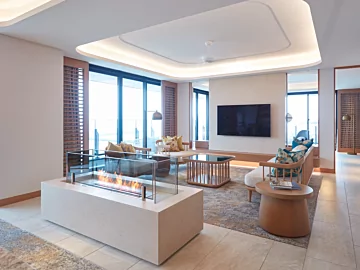 © InterContinental Yokohama Pier 8
 Loading image...


Ventless design
No venting required so ethanol fireplaces fit apartments, renovations, and compact spaces.
Supplemental heating
Add cozy zone warmth with modern fire features to complement your primary heating system.
Powered by e-NRG
Premium liquid fuel engineered for clean, consistent flames with low odour and zero smoke.
Related Collections
Learn More
Ethanol Fireplaces
Bioethanol Fireplaces
Ventless Fireplaces
FAQ's
Are ethanol fireplaces safe for indoor use?
Yes, bioethanol fireplaces are safe for indoor use when operated responsibly. EcoSmart Fire's ethanol burners are certified to UL 1370 (developed through 100+ laboratory tests), EN 16647, and the ACCC Safety Mandate, covering North America, Europe, UK, and Australia. EcoSmart Fire holds more certified ethanol products than any other manufacturer in these markets.
Clean combustion is the safety foundation: bioethanol produces only heat, water vapour, and trace CO₂, with zero carbon monoxide, smoke, or ash. For safe indoor operation, your space needs adequate ventilation (minimum 70–110 m³ [2,470–3,880 cu ft] depending on burner size), a smoke alarm on site, and a dry chemical fire extinguisher (AB:E or ABC rated).
Are ventless fireplaces safe?
Ventless bioethanol fireplaces from EcoSmart Fire are safe when properly installed and operated according to guidelines. Unlike gas ventless fireplaces, bioethanol produces only water vapour, heat, and CO2 (comparable to a burning candle), with no carbon monoxide, smoke, soot, or harmful gases. EcoSmart Fire units include integrated safety features: a manual shut-off system, safety glass windscreens, and flame arrestor fuel bottles designed to minimise spill risk. Independently certified to UL 1370-16 and EN16647, the brand has deployed thousands of units across luxury hotels, resorts, and multi-residential buildings globally for over two decades. Proper room sizing and adequate ventilation are essential; refer to product specifications for your model's requirements.
Do ethanol fireplaces produce enough heat?
Yes, ethanol fireplaces produce genuine, clean-burning heat that meaningfully warms spaces. EcoSmart Fire bioethanol fireplaces deliver quantified heat output across burner sizes: compact burners like the AB3 produce 2 kilowatts (5,800 BTU/h) and warm spaces around 20 m² [215 ft²], whilst larger models like the XL900 output 4 kilowatts (15,000 BTU/h) and effectively heat areas up to 60 m² [646 ft²].
The real advantage lies in the ventless design: heat efficiency exceeds 90 per cent because all thermal energy stays in your room, unlike traditional vented fireplaces that lose approximately 30 per cent through the chimney.
To choose the right burner, match it to your room size. Smaller burners suit compact rooms around 20 m², mid-range burners heat spaces of 40–60 m² comfortably, and larger configurations work for open-plan interiors. Burner selection also affects burn duration, with most models running 7–14 hours depending on flame height; consider both your heating needs and intended use.
Can I refill my bioethanol fireplace while it's running?
No, never refuel your EcoSmart Fire bioethanol fireplace while it's running or hot. Bioethanol requires careful handling: even if the flame isn't visible, a common occurrence in daylight, the burner remains dangerously hot and volatile vapours persist long after the flame appears extinguished. Contact with any ignition source at this stage can cause serious injury.
Always allow the fireplace to cool completely for at least 60 minutes after shutting off before refuelling. The cool-down is part of the rhythm of responsible ownership. When refuelling, use only the approved Safety Nozzle adapter or Jerry Can with Safety Spout, never pour directly from a bottle over or near the burner. If you spill fuel, remove all ignition sources, open windows and doors for ventilation, wipe the area dry, and wait until it's completely dry before relighting.
UL 1370-certified EcoSmart Fire bioethanol fireplaces are designed for safe indoor use when operated correctly. Pairing the correct cool-down protocol with e-NRG bioethanol fuel ensures consistent performance and safety.
Do bioethanol fireplaces need a chimney or flue?
Bioethanol fireplaces with adjustable flame control do not require a chimney, flue, or permanent ventilation system. The clean combustion of bioethanol releases only water vapour and a small amount of carbon dioxide, with no smoke or soot that would need extraction through a dedicated exhaust pathway.
What replaces the chimney is adequate room volume and natural air infiltration. Minimum room sizes are specified per burner. In very compact rooms, a window openable to 25 mm [1 in] or an adjacent open door provides sufficient air exchange.
This chimney-free design underpins the installation freedom EcoSmart Fire bioethanol fireplaces are known for: zero-clearance inserts, freestanding pieces, and existing fireplace conversions all become viable without structural works.
Do ethanol fireplaces smell?
EcoSmart Fire ethanol fireplaces produce minimal odour during normal operation. You may notice a brief, faint scent when lighting or extinguishing, comparable to blowing out a candle. This is caused by denaturants in the fuel that prevent human consumption. The scent's intensity depends entirely on fuel quality.
EcoSmart Fire fireplaces are engineered exclusively for e-NRG Bioethanol, formulated to 96-97% purity with odour-minimising denaturants that reduce fusel alcohols (compounds creating unpleasant smells in lower-grade fuels) to barely perceptible levels. Using other fuels may affect performance and warranty coverage.
If you ever notice an unusual smell, the fix is straightforward: ensure you're using e-NRG Bioethanol and that the burner is clean and debris-free. Once properly fuelled, the smell will not return.
Do bioethanol fireplaces need electricity to operate?
No, bioethanol fireplaces do not need electricity to operate. EcoSmart Fire bioethanol fireplaces run purely on liquid bioethanol fuel, with no power cord, no gas line, no flue, and no utility connections required.
That independence opens placement options a traditional fireplace cannot match. Without hardwired services, the fireplace can sit centred on a freestanding wall, inside bespoke joinery, on an apartment balcony, or anywhere a traditional fireplace simply can't go. Ignition is manual using the supplied Lighting Rod or Fire Lighter, a refillable butane wand, and the flame is adjusted by hand at the burner.
How does a ventless ethanol fireplace work?
A ventless ethanol fireplace works through complete combustion of bioethanol vapour, burning cleanly into heat, water vapour, and minimal CO₂ with no flue or chimney required. Unlike traditional fireplaces, no external ventilation infrastructure is needed.
Bioethanol is pure ethanol fuel (96–97% alcohol by volume), produced through fermentation of corn and plant sugars. When liquid bioethanol sits in the burner tray and is lit, it vaporises and burns above the burner surface, creating a real, visible flame. Because the process is nearly complete oxidation (ethanol vapour combining with oxygen drawn from the room), it generates no soot, smoke, or ash.
The byproducts, primarily heat, water vapour, and the same CO₂ humans exhale, discharge directly into the living space. This room-vented principle is what eliminates the need for a chimney or external vent. Because no heat is lost through a flue, ethanol fireplaces typically achieve thermal efficiency above 90%.
When bioethanol is sourced from sustainably managed renewable feedstock, the carbon cycle is considered carbon-neutral, as CO₂ released during combustion approximately balances what the source crops absorbed during growth.
Are ventless ethanol fireplaces different from ventless gas fireplaces?
Bioethanol and gas ventless fireplaces differ fundamentally in combustion emissions, infrastructure requirements, and fuel delivery, making them suited to different priorities and spaces.
EcoSmart Fire bioethanol fireplaces are approved for both indoor and outdoor use. Their combustion produces only water vapour and minimal CO₂, with no smoke, soot, or toxic gases entering your living space. Gas ventless fireplaces, by contrast, release carbon monoxide and nitrogen dioxide indoors, which is why they're limited to outdoor use only. This emissions difference is the core distinction: bioethanol's clean burn supports indoor air quality; gas requires outdoor deployment.
Infrastructure-wise, bioethanol fireplaces need no gas line connection; you refuel manually from e-NRG bottles. Gas ventless models require a permanent liquefied petroleum or natural gas line, professional installation, and annual inspection and servicing. If your space has no existing gas infrastructure, bioethanol eliminates the cost and complexity of installation.
Maintenance also differs. Bioethanol requires cleaning after the first 50 litres of fuel burned and then periodically depending on usage. Gas units demand annual professional servicing and vent checks. Both achieve ~90% thermal efficiency, but bioethanol's user-managed refuelling and maintenance suit flexibility-conscious owners; gas suits those with existing supply and regular service budgets.
Are there any building code restrictions for ethanol fireplaces?
Ethanol fireplaces typically don't require building permits in most jurisdictions because the ventless design avoids the restrictions that apply to traditional fireplaces. Since there's no chimney, gas line, or flue to regulate, ethanol fireplaces fall outside the strict building codes created for wood and gas systems. EcoSmart Fire products carry UL 1370 and EN 16647 certification, meeting the safety standards most building authorities reference, which often results in automatic exemption from permit requirements.
Where to verify for your location:
- Contact your local building authority directly with your address and installation plan. Most can confirm permit status in one conversation.
- If you're in an apartment, managed community, or strata scheme, notify your body corporate or residents' committee. Whilst permits may not be required, the organisation may want advance notice of the addition.
- Check with your home insurer. Most policies cover ethanol fireplaces without additional riders, but confirming coverage beforehand simplifies the process should a claim arise.
Jurisdictional variation is minimal. With over 150,000 EcoSmart Fire installations across North America, Europe, the UK, and Australia since 2004, the regulatory picture is consistent: ethanol fireplaces gain approval where they're assessed against safety standards rather than traditional fireplace codes. If your jurisdiction does impose conditions, they're typically straightforward ventilation or room-volume requirements, not permit blockers.